
.png)


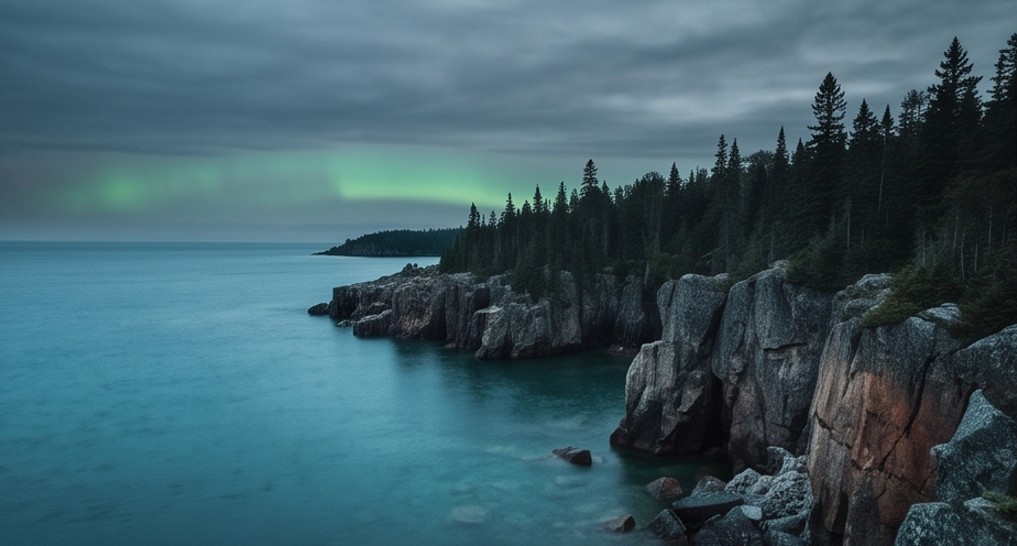
If your version of a "Northern Ontario vacation" involves a dock, a Muskoka chair, and a two-hour drive from Toronto, I have some uncomfortable geography for you. You've been to southern Ontario. It's beautiful. It's just not the north.
Here's the thing about 2026: Canadians are ditching U.S. travel at a pace nobody predicted, and pouring that money into "domestic" trips instead. But almost none of it is reaching the actual north. There's also a sky event happening right now that won't repeat for another decade. Let's get into it.
80% of visits, 9 regions
The Map Has Been Lying to You
Muskoka, Parry Sound, and Algonquin Park are marketed as "the north" — but statistically and geographically, they're part of southern Ontario's tourism backyard. Statistics Canada tracks Ontario in tourism regions, and the numbers are blunt about this.
The Greater Toronto Area plus eight neighboring regions — a belt that runs from Niagara Falls and wine country in the southeast all the way up to Muskoka, Parry Sound, and Algonquin Park — account for roughly four in five visits province-wide. That's not a rounding error. That's the entire province's tourism industry, concentrated in a strip of land you could drive across in a day.
Meanwhile, real Northern Ontario — Sudbury, Sault Ste. Marie, Thunder Bay, Timmins, the entire Lake Superior coastline — sits outside that belt entirely. Most of what's left over doesn't even go there; it flows to Southeastern Ontario, Ottawa, and the Haliburton Highlands instead. The actual north gets whatever's left after that.
800,000 km², 780,000 people
90% of the Land, Under 5% of the People
Northern Ontario covers roughly 800,000 square kilometres — nearly 90% of the province's entire land area — and is home to just 780,000 people. For scale, that's a region larger than France and Germany combined, holding fewer residents than the city of Mississauga.
Ontario's total population sits around 16 million. Do the math and Northern Ontario holds under 5% of the province's people on 90% of its land. That's not "remote." That's a population density most countries would call uninhabited.
The emptiness isn't a bug in the trip. It's the entire point of taking it.
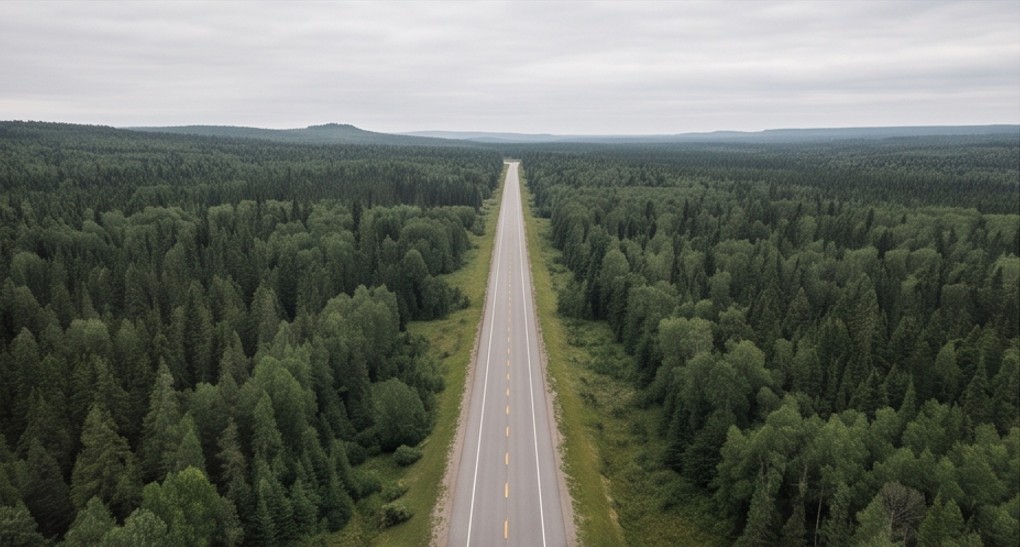
67% now plan a domestic trip
Canadians Are Rewriting Where They Vacation — Just Not Far Enough North
2026 is producing the biggest shift in Canadian travel behavior in a generation, and almost all of the beneficiaries are in southern Ontario. Cross-border travel has cratered. Canadian-resident returns from the U.S. dropped 25.4% in 2025, and land crossings — the road trips that make up nearly half of all Canada-to-U.S. travel — were down roughly 35% year-over-year by March 2026.
That money didn't disappear. It moved. Domestic tourism spending rose 2.7% in 2025, and tourism GDP grew at an annualized 4.8% in the fourth quarter, outpacing the broader Canadian economy for the third straight quarter.
This is the biggest tailwind Northern Ontario tourism has had in decades — and most of it is still landing on the same nine southern regions that were already crowded. The north isn't short on demand. It's short on Canadians realizing it's an option.
66% of trips are same-day
Why Everyone Stops at the Same Nine Regions
Ontario's travel habits are built around short, local trips — which structurally excludes a region that takes ten hours to reach by car. Two-thirds of the 119.6 million visits made in 2024 (66.1%) were same-day trips. Another quarter lasted one or two nights.
The average visit covers a strikingly short distance: about 7 in 10 trips were under 320 kilometres, with the 40–79 km range being the single most common distance band. Only 6.6% of visits involved a hotel stay at all; most people just drove to see friends or family and drove home.
Northern Ontario doesn't fit that pattern, so it gets filtered out before anyone even considers it.
That's an opportunity disguised as an obstacle. If you're willing to commit to a real trip instead of a day trip, you're competing with almost nobody for campsites, trails, and hotel rooms that the other 93% of Ontario travellers never think to book.
Solar Cycle 25, 2026–27 season
The Sky Won't Look Like This Again Until 2037
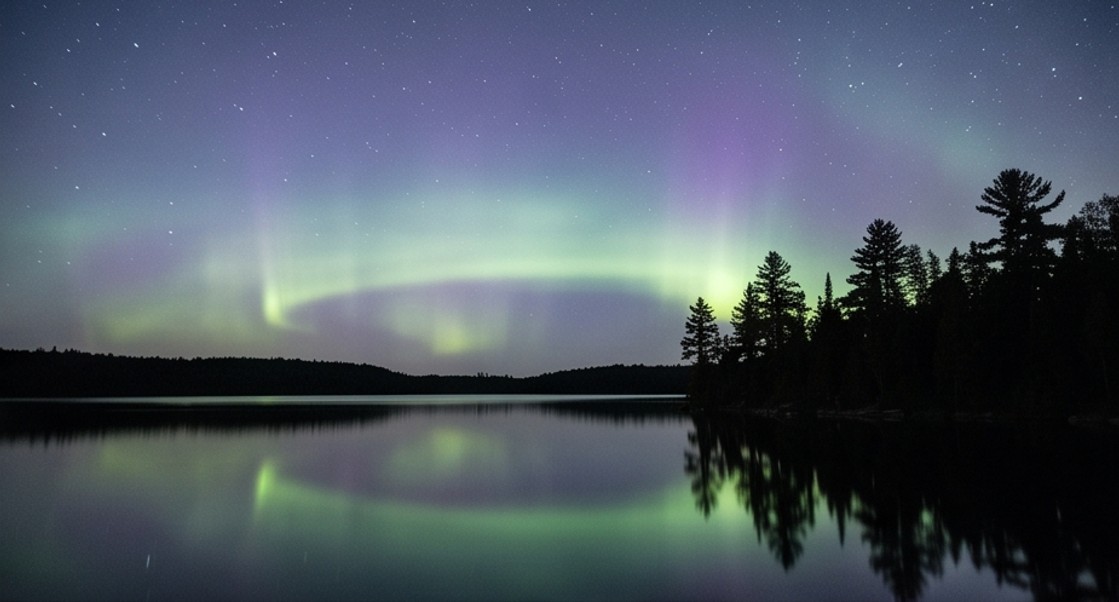
2026 sits inside a rare aurora window that solar physicists say won't repeat for over a decade. Solar Cycle 25 hit its maximum in 2024, and the best displays typically arrive a couple of years after the peak — putting the 2026–2027 season directly in the sweet spot.
Forecasters are calling this stretch an exceptional window for aurora chasers, pointing to it as the last comparably strong opportunity before activity fades toward the next solar minimum around 2031. The next viewing window this good isn't expected until roughly 2037.
Manitoulin Island
Home to Canada's first RASC-designated commercial Dark-Sky Preserve — a 360-degree open field built for aurora and meteor showers alike.
Quetico Provincial Park
2,000-plus lakes of protected wilderness, holding International Dark-Sky Park status since 2021.
Sleeping Giant Provincial Park
Cliff-top lookouts over Lake Superior, with aurora reflecting off the water on a clear night.
1,300-mile marked route
What's Actually Up There
The Lake Superior coastline is the single best-documented, most rewarding route in the region, and it's built for exactly this kind of trip. The Lake Superior Circle Tour is a marked, 1,300-mile self-guided route with roughly 40 official signs, running along some of the most dramatic freshwater coastline anywhere in the world.
Along the way: Ouimet Canyon, a boardwalk-accessible gorge that plunges about 100 metres straight down. Killarney's "Crack" trail, cutting across the pink granite of the Canadian Shield to a panoramic summit. Manitoulin's Cup and Saucer Trail, plus its dark-sky preserve for the nights.
Destination Ontario's own suggested itinerary for the full Toronto-to-Thunder-Bay route runs 13 days, though plenty of travellers compress the Lake Superior stretch into a tighter 7-to-9 day loop.
You're not squeezing this into a long weekend — and that's exactly why almost nobody else is doing it.
+52% accommodation, 2021–24
The Real Cost Math
Northern Ontario isn't automatically cheaper than a Muskoka weekend, but it's not the expensive gamble people assume either. Ontario-wide accommodation prices climbed more than 52% between 2021 and 2024, and that inflation hit cottage country as hard as anywhere — arguably harder, given how crowded and in-demand those southern lakes have become.
The north has one major cost advantage the south doesn't: crown land camping. Ontario allows free camping on unoccupied crown land across huge stretches of the north, provided you hold a valid license and follow stay-length rules — something that doesn't exist in the tightly booked provincial parks of cottage country.
The premium you're paying for Northern Ontario isn't money. It's time.
Go before everyone else figures this out
The domestic travel boom reshaping Canadian tourism in 2026 is still young. The aurora window closes in 2027 and doesn't reopen until 2037. The emptiness that makes this trip special is a current condition, not a permanent one.